Tension in Art, Wine, and Song
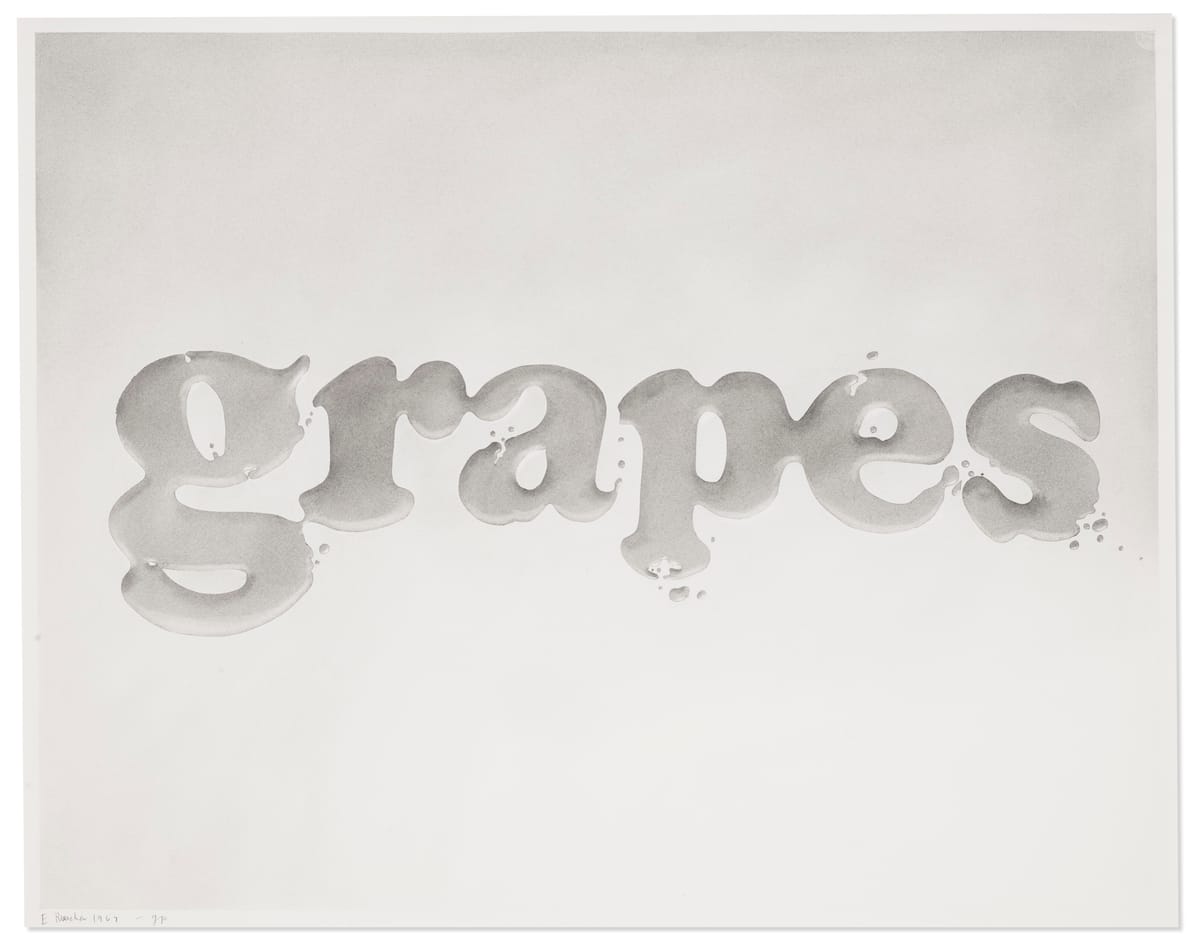
I love art and I love words, and Ed Ruscha is a favorite visual artist. Reading his artwork adds connection and intensity, warmth, to my appreciation, and for Ed, too. “Words have temperatures to me,” he once said. “When they reach a certain point and become hot words, then they appeal to me.”
Grapes, from 1967, is from an era in the late sixties when Ed had a “romance with liquids.” He created drawings and paintings of words in liquid form, wet but not, appearing to rise up from the canvas, edges glistening, tempting you to dip your finger in a letter.
For Grapes, Ed used gunpowder as an material alternative to graphite or oil paint, as an experiment. “By chance I happened to have a canister of gunpowder,” he reveals. “I soaked [the gunpowder] in water and leeched the salt out and all that, and it became, basically, sulphur and charcoal. That gives it color and texture, and I started making drawings.”
There’s tension in the artwork: the varieties of the word, the round vivid fruit in black and white, and the volatile material Ed used. The visual surface of the word on paper is viscous, colorless, and gritty, while the vision beyond the word is of ripe clusters on the vine, grown from ancient oceanic and volcanic rock and soil, full of flavor and a future.
❉
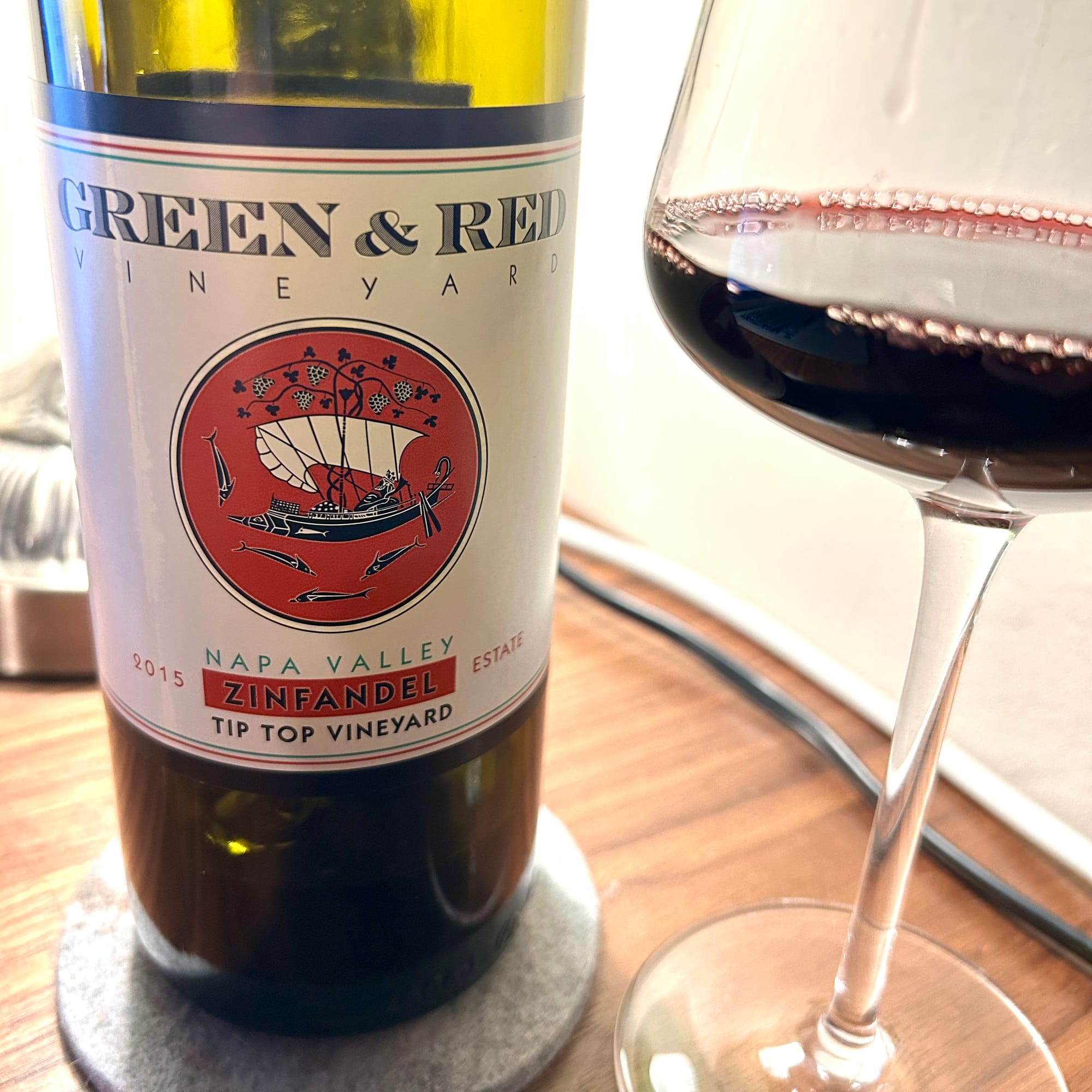
Nearly 2,000 feet up from Chiles Valley in eastern Napa sits the Tip Top Vineyard of Green & Red Vineyard. Sculptor, UC Berkeley art professor, and winemaker Jay Heminway bought the land in the late sixties and later planted vines up there. “At heart, he was an artist,” said Jay’s daughter Tobin after his passing in 2019. “You see that from the sculpted terraces of Tip Top Vineyard.”
“The soils are rust red and rocky.” It says so on the back label of the 2015 Green & Red Vineyard Tip Top Vineyard Zinfandel I’m enjoying. From red chert rock and bands of green serpentine, the materials of a mountain top sculptor. I don’t know how much sculpture Jay created after he started making wine in the late seventies, but producing delicious Zinfandel in prime Cab territory is the act of an innovator, which is what artists are.
The 2015 Tip Top is a dynamic mountain wine, fruit forward, vibrant and bright, while raspy tannins and notes of cedar and anise join the ride towards a warm, long finish. A serpentine form of flavors and aromas.
There’s tension in the wine: a streak of sharp, well-toned acidity sinuously races through the lively strawberry savoriness. Acid and fruit, amplifying intensity and anticipation on the palate, striking a balance that is energetic and warm.
❉
Lucinda Williams released her self-titled album, her third, in 1988, loaded with songs destined to become Americana standards. Too country for rock, too rock for country, Lucinda combined both with blues, Cajun and border music, and heart-worn lyrics.
Like drawing with gunpowder or sculpting into a mountain top, Lucinda makes music that doesn’t come easy. Her songs evolve from lived experience, with all the worry and weight and joy and emotion that fill every damn moment of every damn day.
The first song on the album is “I Just Wanted to See You So Bad.” The tune is tense with desire and anticipation. Lucinda sings the the words, I just wanted to see you so bad, every other line, a constant justification for the last-minute, all-night drive to spark something special with someone she barely knows. The urgency is relentless, a fleet need for more or a desperate escape from now, or both.
There’s tension in the song: when Lucinda amps up the zeal and sings the title of the song twice, I just wanted to see you so bad, I just wanted to see you so bad, the tom drums pound low like a quickened heartbeat, fluttering with expectation and nerves.
❉
Links:
Video: Ed Ruscha on working with gunpowder
Book: Ed Ruscha Romance with Liquids
Green & Red Vineyards
Lucinda Williams